Wednesday
Wednesday: Light that hides the stars
Rocket looks up in the city. "Where did all the stars go?"
Raven looks around. "What do you notice? Bright lights everywhere."
Nova points at a lamp shining up. "Hint: some light goes where it is not needed."
Light pollution
Light pollution is extra light that spills into the night sky.
It comes from streetlights, parking lots and other outdoor lights.
It makes the sky glow and hides faint stars.
Most people in the world cannot see the Milky Way from home.
That is about 8 out of every 10 people!
- Read the question.
- Tap your answer.
- Tap a card.
- Then tap its spot.
Faint stars are easier to see on moonless nights.
Where stray light comes from
Some outdoor lights shine up or sideways.
That light does not help anyone see the ground.
It spills into the sky instead.
The sky glows, and faint stars fade away.
- Read the question.
- Tap your answer.
| Light pollution fact | True or false? |
|---|---|
| Streetlights can add to light pollution. | ? |
| Light pollution makes more stars appear. | ? |
| Parking lot lights can light up the sky. | ? |
| Most people can see the Milky Way from home. | ? |
- Tap a card.
- Then tap its spot.
Count the outdoor lights you can see.
Which ones shine up or sideways?
Which ones point down?
A grown-up stays with you.
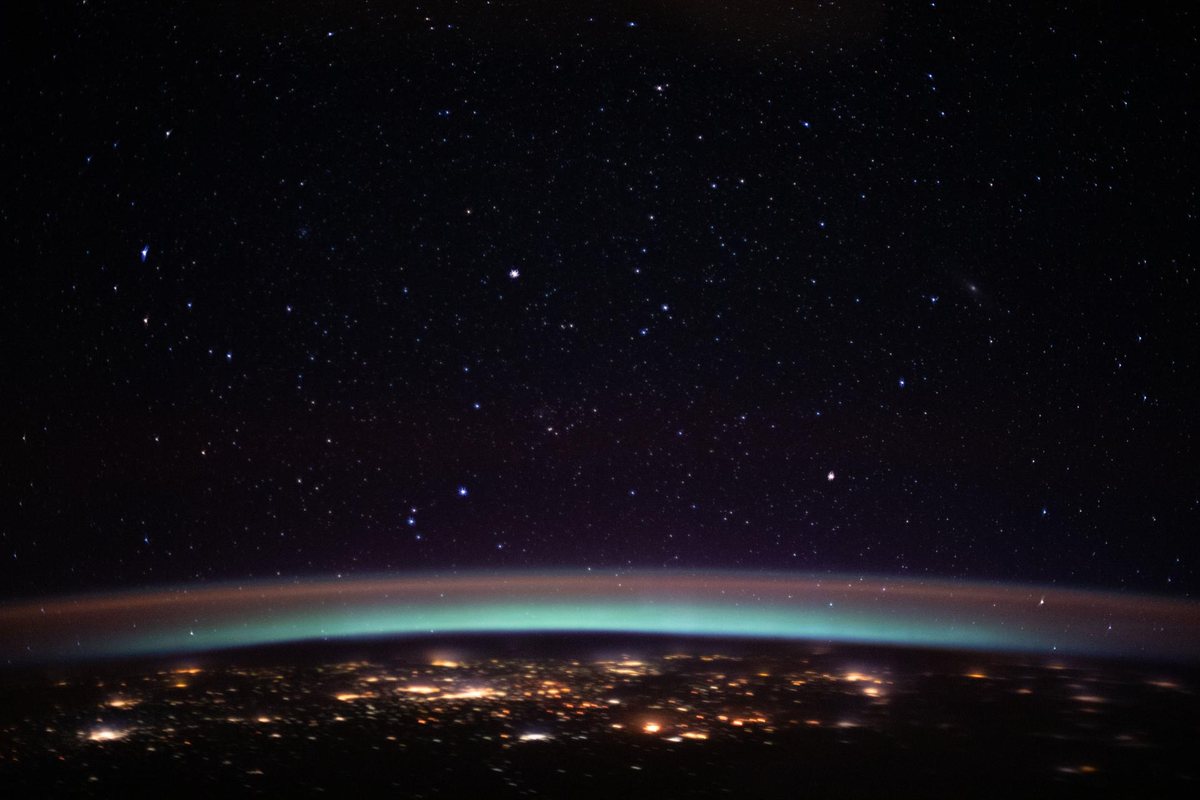
City lights seen from space. Astronauts took this from the International Space Station.
It shows lights where Europe meets Asia, on March 20, 2020.
The stars are above. The city lights shine below.
Image credit: NASA (photo iss062e103874)
You know what hides the stars! Tomorrow we learn how to help.