Tuesday
Tuesday: Meteor showers
Rocket reads a calendar. "A meteor shower comes every August!"
Raven wonders. "What do you notice? Why the same month each year?"
Nova draws Earth's path and a dusty trail. "Hint: watch where the paths cross."
Comet crumbs
A comet is an icy space object.
Near the Sun, it leaves a trail of dust and rock.
Earth passes through that trail at the same time each year.
Then we see more meteors than usual.
That is a meteor shower.
| Meteor shower | Month each year |
|---|---|
| Lyrids | April |
| Perseids | August |
| Orionids | October |
| Leonids | November |
| Geminids | December |
- Read the question.
- Tap your answer.
| Shower fact | True or false? |
|---|---|
| Meteor showers happen at about the same time each year. | ? |
| A comet leaves a trail of dust and rock. | ? |
| A meteor shower means stars are falling. | ? |
A year of showers
Earth makes one trip around the Sun each year.
Along the way, it crosses old comet trails.
It crosses each trail at about the same time each year.
So each shower comes back in the same month.
- Read the question.
- Tap your answer.
- Put them in month order.
- Tap a card, then tap its spot.
Write the five months on a paper.
Next to each month, write the shower name.
Circle the next one coming up.
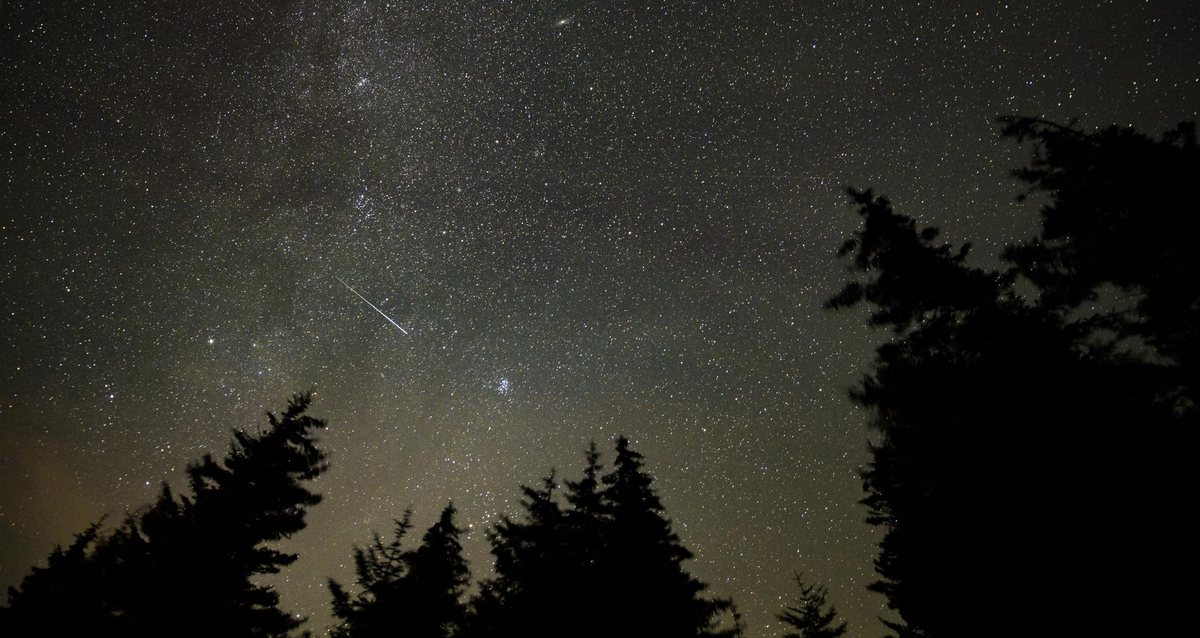
A real Perseid meteor! Look for the thin bright streak.
A NASA photographer took this on August 11, 2021, in West Virginia.
The camera stayed open for 30 seconds to catch it.
Image credit: NASA/Bill Ingalls
You know where showers come from! Tomorrow we learn how to watch.